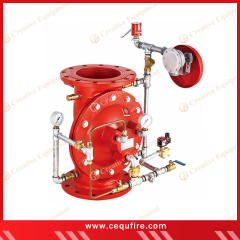


|
Valve Type |
Diaphragm Type Deluge Valve |
|
Connection Type |
Flange End (ANSI, DIN Standards) |
|
Nominal Diameter |
2½" – 10"(DN65 – DN250) |
|
Operating Temperature |
4°C to 70°C |
|
Installation |
Vertical Installation |
|
Finished |
Standard Red Painting |
|
Working Pressure |
1.6 MPa (Max. Working Pressure) |


- Oil and gas industry fire suppression systems
-Chemical processing plants
- Aircraft hangars and high-hazard storage areas
-Power plants and transformer protection
- Marine and offshore facilities

|
 |
|

Q1: What is a deluge valve used for?
A1: It is used in fire suppression systems where rapid and large-volume water discharge is required upon detection of fire.
Q2: How is the deluge valve actuated?
A2: It can be opened by hydraulic, pneumatic, or electric actuators depending on system design.
Q3: Can the valve operate automatically during a fire?
A3: Yes, when connected to a detection system, it automatically opens to release water.
Q4: Is maintenance required frequently?
A4: Routine inspection and testing are recommended, but the valve is designed for durability and minimal maintenance.